Science and faith
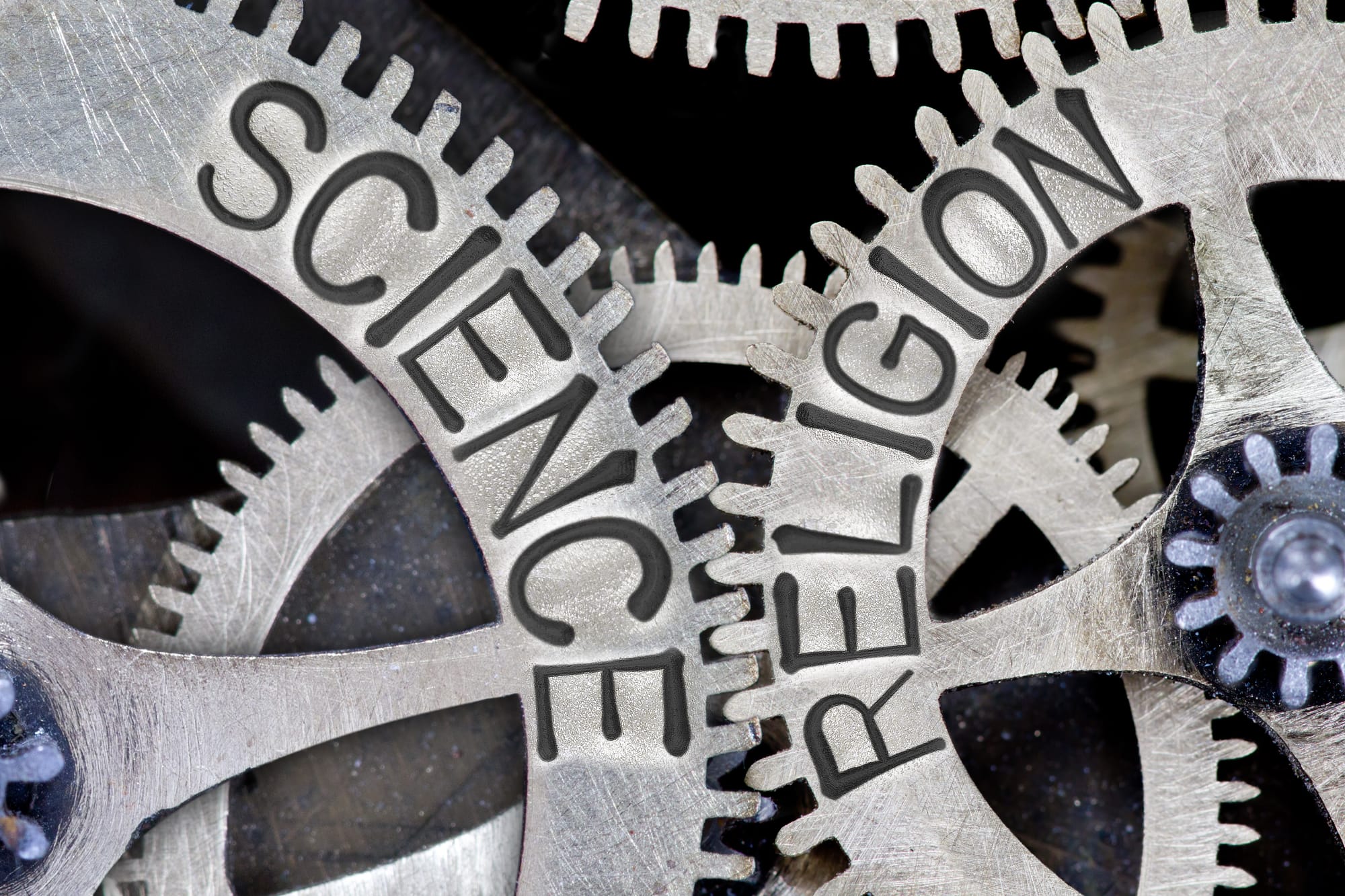
This lesson addresses one of the most pressing issues among students: the supposed conflict between the scientific and religious worldviews. The goal is to move from the "clash" model to that of "dialogue."
1. The prejudice of the clash
In the popular imagination, science and faith are enemies. It's often thought that science is based on "facts" and faith on "fairytales."
- The myth of conflict: It arises historically from cases like that of Galileo Galilei, but history teaches us that many of the greatest scientists (Newton, Pasteur, Galileo himself) were profoundly religious.
- The methodological error: The conflict arises when science wants to do philosophy (affirming that God does not exist because He cannot be seen under a microscope) or when religion wants to do science (reading Genesis like a geology textbook).
2. The scope of expertise: The "How" and the "Why"
To understand how they can coexist, we must distinguish their objectives:
- Science answers the question: HOW? (How did the universe form? How does DNA work? How does a species evolve?) It uses the experimental method.
- Faith answers the question: WHY? (Why does something exist instead of nothing? What is the meaning of my life? Why does evil exist?) It uses listening to Revelation and spiritual experience.
3. Case studies: Big Bang and Evolution
Often used as evidence against faith, they are actually concepts born or accepted in the theological field:
- Georges Lemaître: Few people know that the father of the Big Bang theory was a Belgian Catholic priest and astrophysicist. For him, the expansion of the universe was consistent with the idea of a beginning created by God.
- Evolutionism: The Catholic Church (from Pius XII to Pope Francis) does not reject the theory of evolution, as long as man is not reduced to pure matter, excluding the spiritual dimension (the soul).
4. The Principle of NOMA (Non-Overlapping Magisteria)
Biologist Stephen Jay Gould proposed the idea of "non-overlapping Magisteriums": science and religion occupy separate domains. However, man is one: he needs both medicine to heal the body and hope to heal the soul.
Ideas for classroom activities (Laboratory)
Divide the class into two groups and assign a "challenge" based on these quotes:
- Group A (Science): Comment on Albert Einstein's quote: "Science without religion is lame." In what sense does science need an ethic or religious wonder?
- Group B (Faith): Discuss Albert Einstein's quote: "Religion without science is blind." How does faith risk becoming superstition if it ignores scientific discoveries?