Jacques Maritain
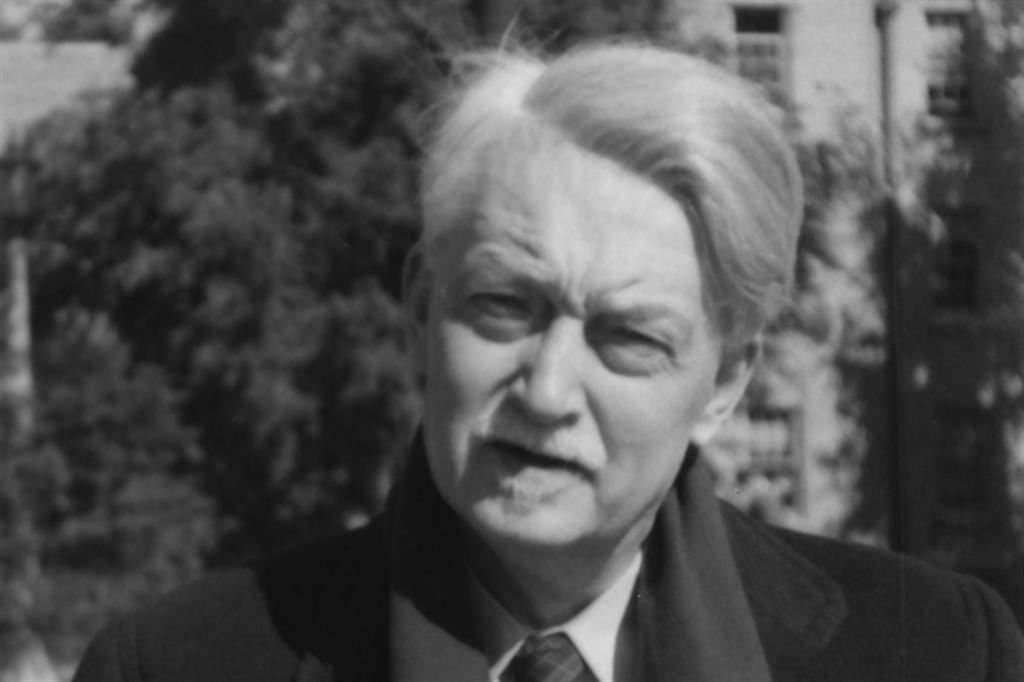
The Spiritual Itinerary, Thomism and Political Philosophy
The figure of Jacques Maritain (1882–1973) represents one of the highest speculative peaks of twentieth-century Catholicism. His intellectual journey is inseparable from the profound human, loving, and spiritual bond with his wife, Raïssa Oumançoff: together they traversed the cultural currents of their time, moving from the anguish of nihilism to the light of Thomistic metaphysics, ultimately laying the doctrinal foundations for modern democracy and the Second Vatican Council.
1. Youth and the Sorbonne Crisis
Born in Paris in 1882 into a Protestant family—the son of lawyer Paul Maritain and Geneviève Favre (herself the daughter of the renowned politician Jules Favre)—Jacques attended the Lycée Henri-IV and then enrolled at the Sorbonne, where he graduated in philosophy and natural sciences. It was in the university classrooms that he met Raïssa Oumançoff, a young Russian immigrant of Jewish origin. As Raïssa herself recalled in her autobiographical volume , Les Grands Amiens , the two soon became inseparable, driven by the absolute need to rethink together the universe, justice, and the profound meaning of life, rejecting everyday banalities. However, the academic teaching at the Sorbonne of the time, deeply imbued with skepticism and relativism, offered no answers to their fundamental questions. This lack of certainty dragged the young couple into a devastating metaphysical anguish, an existential impasse that brought them to the brink of suicide.
2. The Great Masters: From Bergson to Léon Bloy
What saves the two young people from the despair of doubt is the encounter with two radical figures of the Parisian cultural scene:
- Henri Bergson and the Possibility of the Absolute: Between 1901 and 1902, their friend Charles Péguy took the couple to attend the packed lectures Bergson gave at the Collège de France. By explaining Plotinus's thought, Bergson restored their faith in the possibility of knowing the truth, experiencing freedom, and contemplating the Absolute. While fascinated by this spiritualism, the Maritains soon discerned the fragility of Bergson's philosophical foundation and the ambiguous theoretical tendencies of his disciples.
- The Meeting with Léon Bloy: Married in 1904, the Maritains experienced a turning point on June 25, 1905, when they climbed the steps of the Sacré-Cœur to meet the writer Léon Bloy, a sort of "ungrateful beggar" who despised philosophical formalisms to proclaim the radicality of divine truth from the rooftops. This meeting marked the beginning of their journey of conversion to Catholic Baptism.
3. The Discovery of Saint Thomas and the Meudon Laboratory
The final intellectual breakthrough occurred during Raïssa's long convalescence. Their spiritual advisor, the Dominican Humbert Clérissac, invited her to read the Summa Theologica of Saint Thomas Aquinas. Her enthusiasm immediately infected Jacques: the two understood that the Absolute could be reached not only through faith, but also through the correct use of reason. For Maritain, it was an enlightenment; Thomism revealed itself to him as a progressive and dynamic philosophy, capable of assimilating and bringing to completion the truths scattered throughout different historical systems (a concept that would emerge clearly in works such as Reason and Reasons , in the dialogues of