Henri Bergson
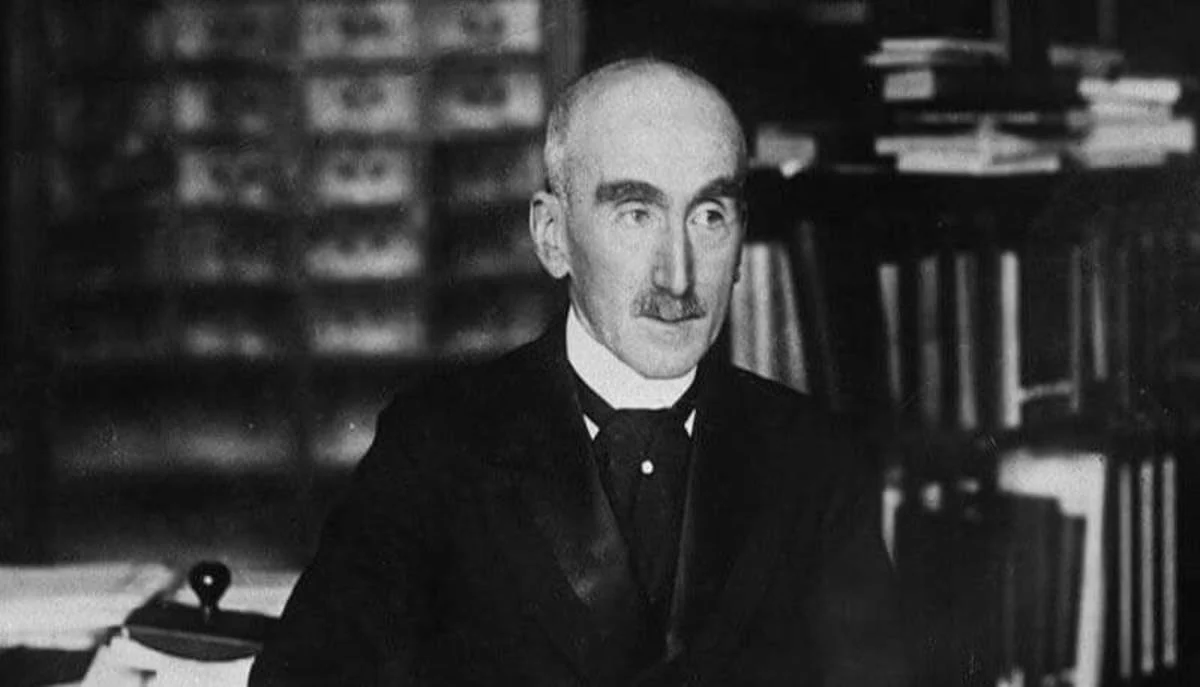
The Intuitionist Turn and the Philosophy of Duration
Between the late nineteenth and early twentieth centuries, the immense faith in Positivism entered an irreversible crisis. The euphoria of scientific progress, which had promised to unravel every mystery of the cosmos through the rigid triad of observation, hypothesis, and verification , began to reveal its limits. In response to this all-encompassing scientism, philosophy returned to the spiritual and metaphysical dimension of existence. The greatest exponent of this cultural reaction was the French thinker Henri Bergson , the founding father of intuitionism and promoter of a school of thought— Bergsonism —capable of influencing not only philosophy, but also art, literature, theology, and social life in the twentieth century.
1. The Biography: Between Academic Success and Final Consistency
Henri-Louis Bergson was born in Paris on October 18, 1859, to a Jewish family of Irish origin. He attended the prestigious Lycée Condorcet and demonstrated a precocious brilliance in both the sciences and the humanities, before embarking on studies in mathematics and philosophy at the École Normale Supérieure in Paris. During his university years, he forged relationships with prominent figures such as Jean Jaurès and Maurice Blondel, developing the conviction that science cannot exhaust the complexity of real life and that spirituality is an indispensable key to understanding the world. After graduating, he taught at the lycées of Angers and Clermont-Ferrand, and later at the renowned Parisian Rollin and Henri IV institutes. In 1891, he married nineteen-year-old Louise Neuburger, cousin of writer Marcel Proust, who would remain deeply fascinated by Bergson's theories on time and memory. The new century established Bergson as one of Europe's most brilliant minds:
- Triumph at the Collège de France: In 1900, he became maître de conférences at the École Normale Supérieure and was awarded the chair of Greek and Modern Philosophy at the Collège de France. His lectures and conferences became unmissable social and cultural events, attended en masse by the entire Parisian intelligentsia.
- International recognition: In 1914 he was elected Academician of France. In 1918 he assumed the presidency of the Commission for Intellectual Cooperation of the League of Nations and in 1927 he was awarded the Nobel Prize for Literature , a testament to the extraordinary stylistic quality of his works.
- Moral Choice During the Occupation: In the last years of his life, he became deeply drawn to Catholicism, which in his 1937 will he defined as "the complete fulfillment of Judaism" (ordering the presence of a priest at his funeral). However, when the Germans occupied Paris in June 1940, Bergson scornfully rejected the special treatment offered him as a distinguished intellectual: out of solidarity and moral consistency, he chose not to officially convert and to share the tragic fate of persecution of his native people. He died in Paris on January 4, 1941, at the age of 82, due to respiratory failure.
2. Philosophical Thought: Intuition versus Scientism
Bergsonian spiritualism found its peak expression in